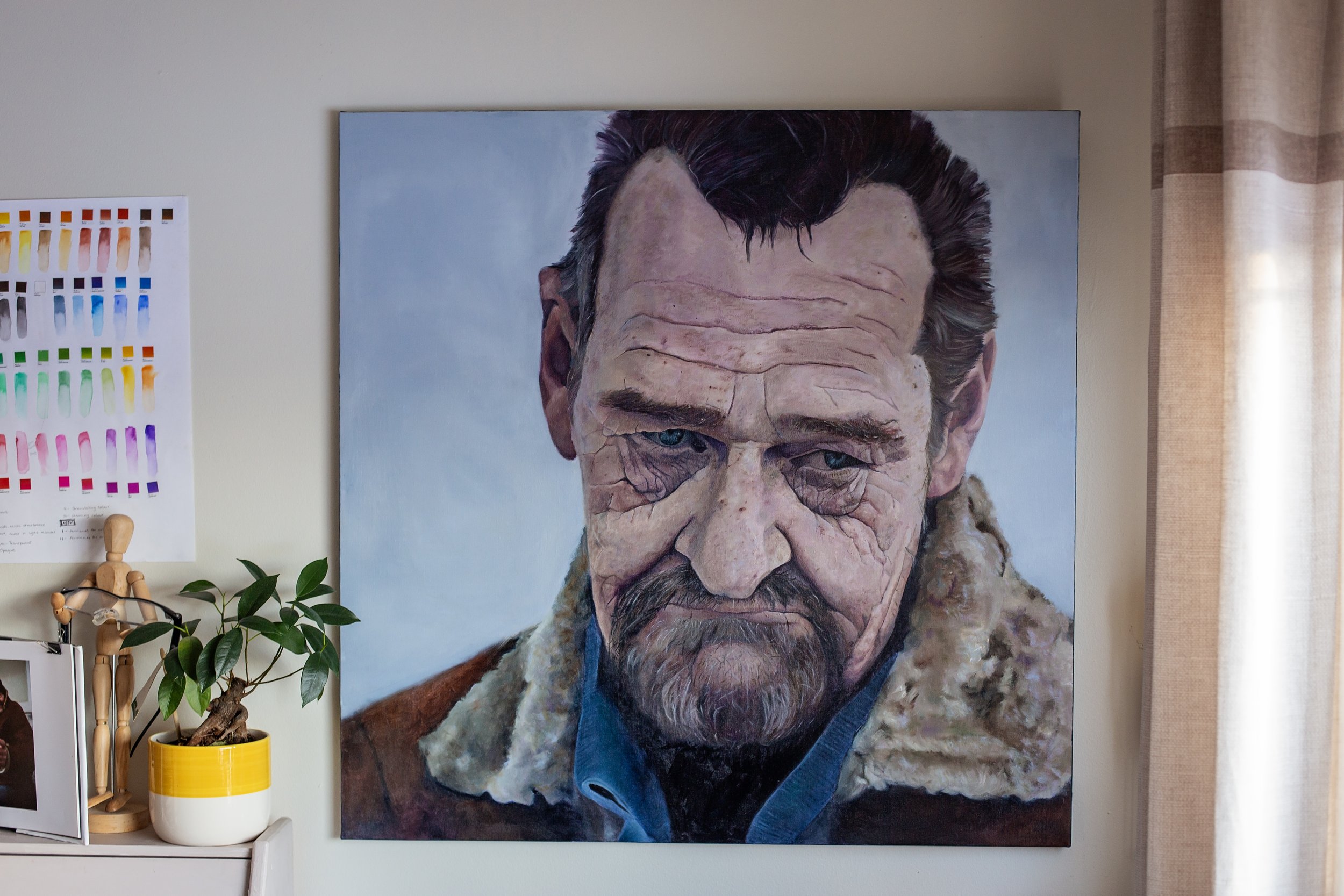
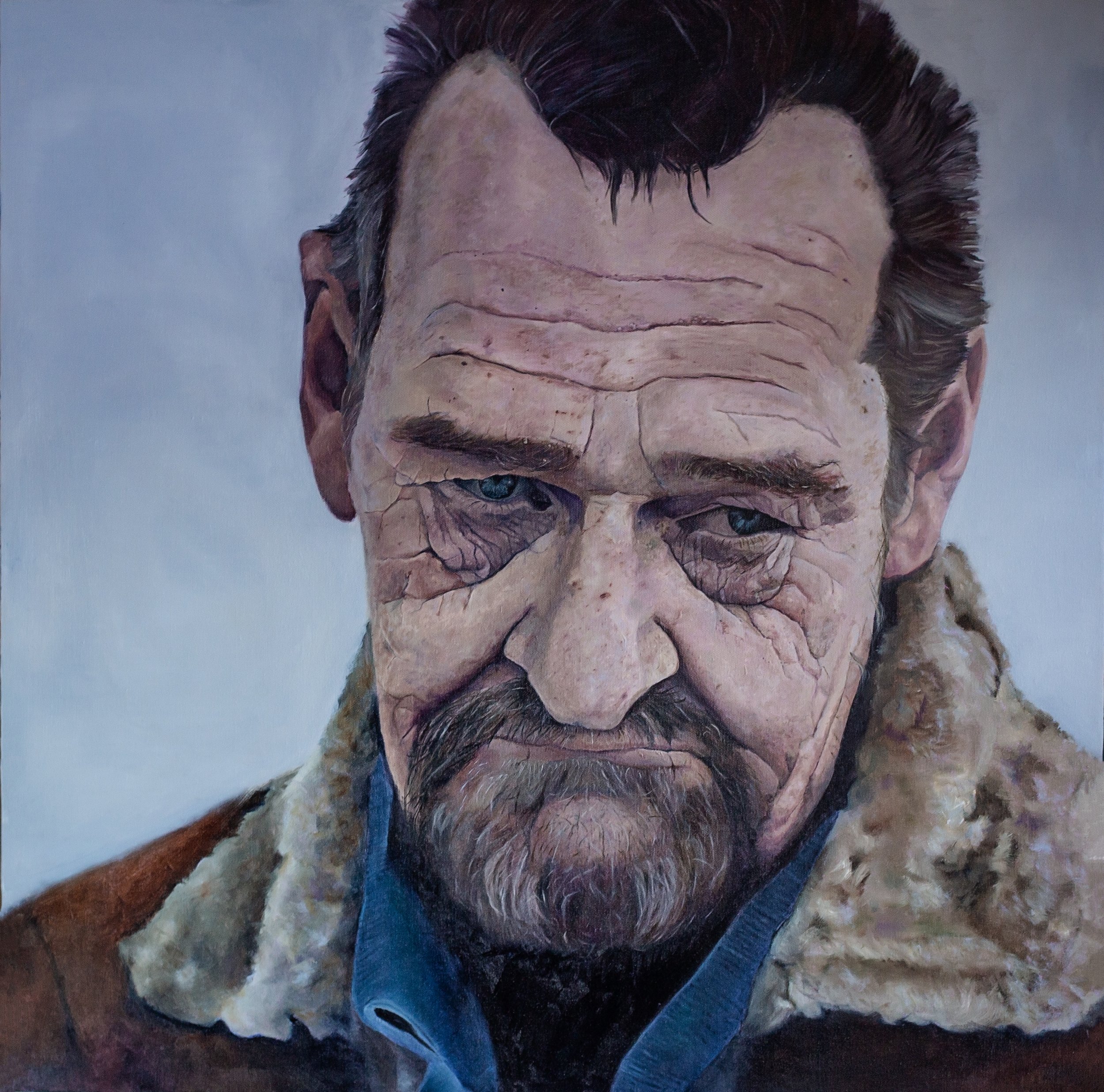
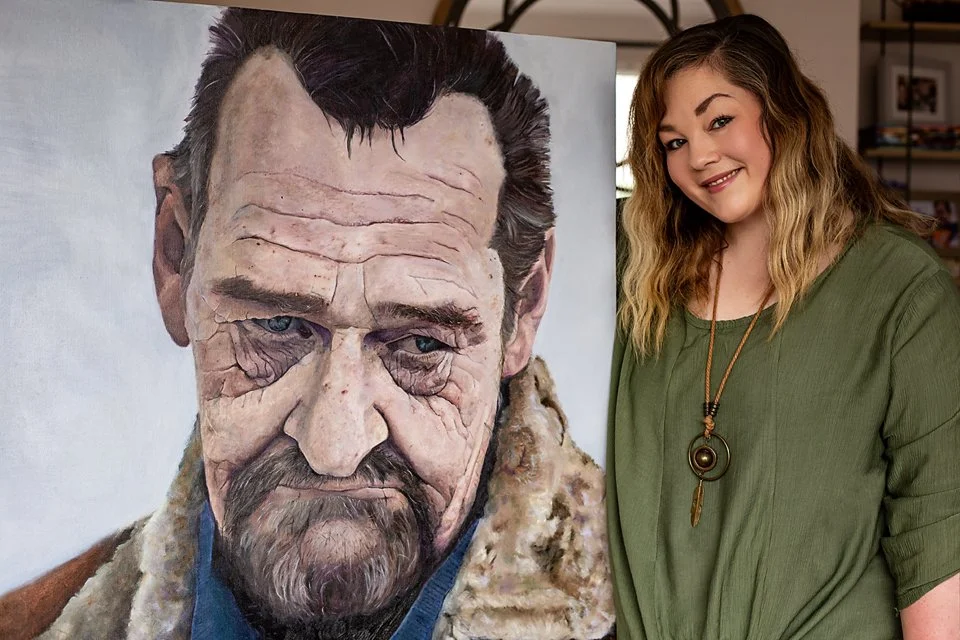
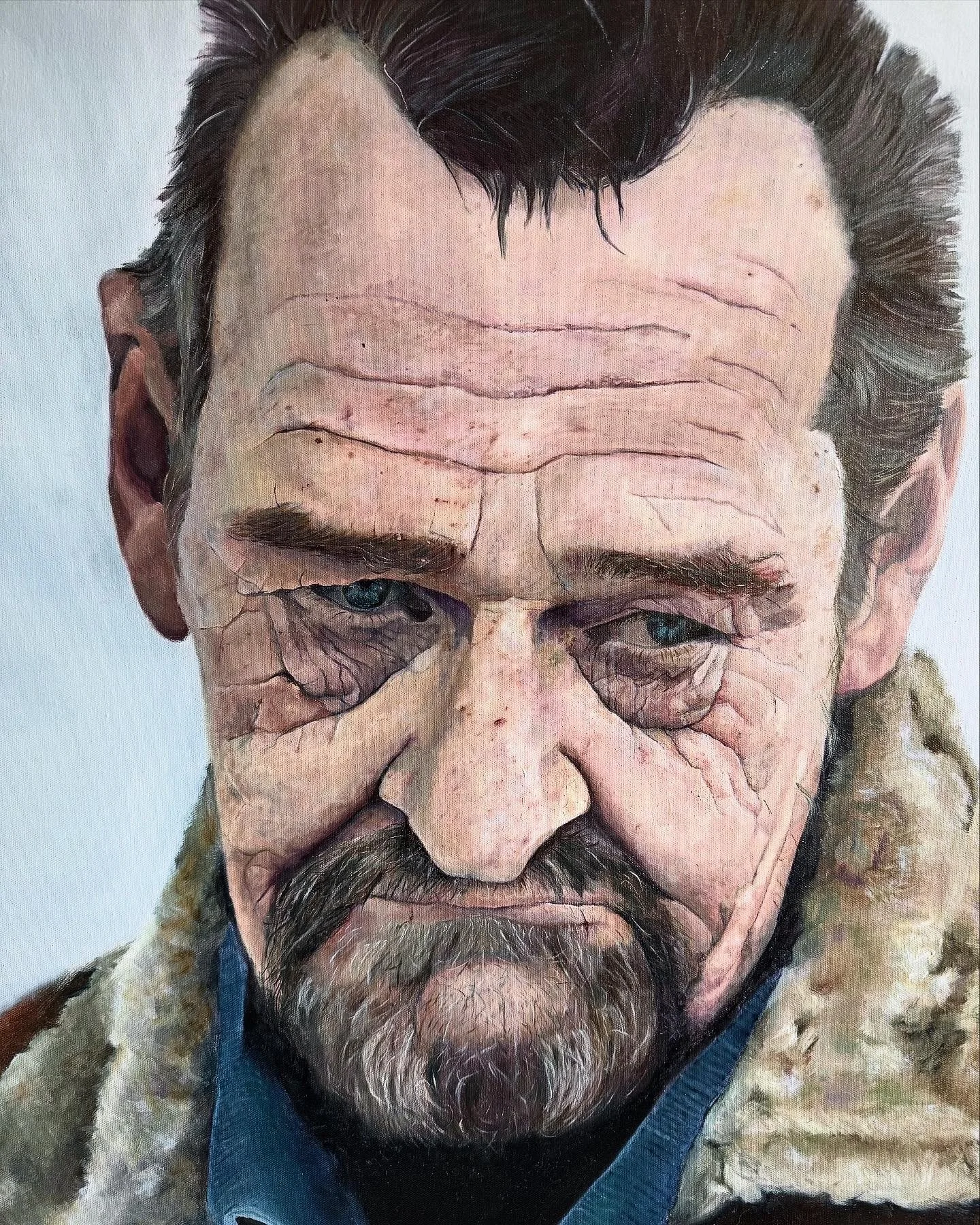
Striking contemporary portrait painted in water-mixable oils, this 80 × 80 cm artwork captures raw emotion through hyper-realistic detail, textured skin tones, and a muted atmospheric background. A powerful statement painting that explores age, character, and human vulnerability with masterful realism. The painting was named after the nursery rhyme of which the origins date back to the Irish potato famine (1845-1852), which resulted in over one million deaths. During this time, Irish beggars, known as "Paddies," would travel to England, selling knick-knacks door-to-door. They'd play a "nick-nack" rhythm using spoons, hoping to receive pennies.
According to legend, these beggars would often receive a "whack" and be sent on their way, while their dog would be given a bone. It was used to warn children away from strange old men.
Striking contemporary portrait painted in water-mixable oils, this 80 × 80 cm artwork captures raw emotion through hyper-realistic detail, textured skin tones, and a muted atmospheric background. A powerful statement painting that explores age, character, and human vulnerability with masterful realism. The painting was named after the nursery rhyme of which the origins date back to the Irish potato famine (1845-1852), which resulted in over one million deaths. During this time, Irish beggars, known as "Paddies," would travel to England, selling knick-knacks door-to-door. They'd play a "nick-nack" rhythm using spoons, hoping to receive pennies.
According to legend, these beggars would often receive a "whack" and be sent on their way, while their dog would be given a bone. It was used to warn children away from strange old men.